

Are all your customers the same? Obviously not. That’s where segmentation comes in. Important differences exist between new vs. existing customers and we’re here to determine how to attract each.
One-size fits all pricing and marketing rarely works. This is because each buyer persona has different browsing and purchasing habits.
When you begin to segment your customers based on their browsing and purchasing behavior, you eliminate any element of guesswork that might happen. It means you have a better idea of what works for specific customer groups.
In this blog post, we’re going to think about whether it’s a good idea to set different pricing strategies for our existing customers as opposed to our new customers.

Why it’s important to segment your customers
However, what you don’t want to do is alienate your customers by offering all of your best deals to new customers only. After all, if someone has been with you for over a year, they deserve to have a good deal more than someone who just stumbled across your business the other day.
Phone companies are notorious for offering deals that only suit those people who are not yet customers.
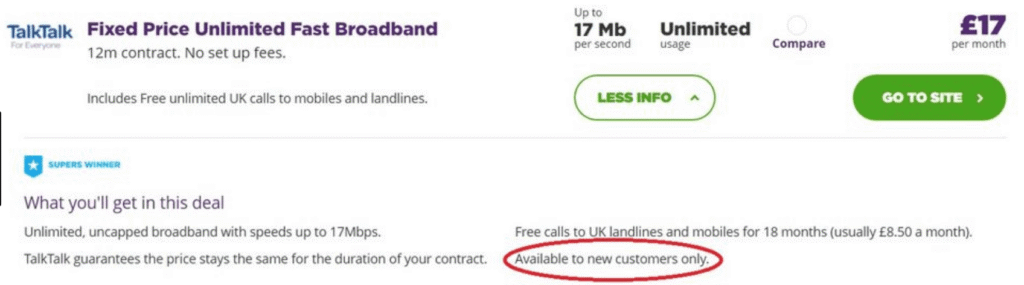
In the deal above, new customers can make use of this specific deal. Companies adopt this sort of approach because they want to attract new people to their store.
In these cases, it’s good to segment people by customer type. If everyone had access to the new exciting deals, customers would change far too often.
You do, however, need to be careful when adopting this approach as it can often lead to your current customers becoming frustrated with their own package, knowing a new customer is getting a better deal than themselves. Don’t let this turn into a competition between new vs. existing customers.
It’s cheaper to keep a current customer than get a new one
By now, it should be obvious that it’s cheaper to keep your current customers than to acquire new ones.
In fact, it’s five times more expensive to win a new customer than to keep a current one.
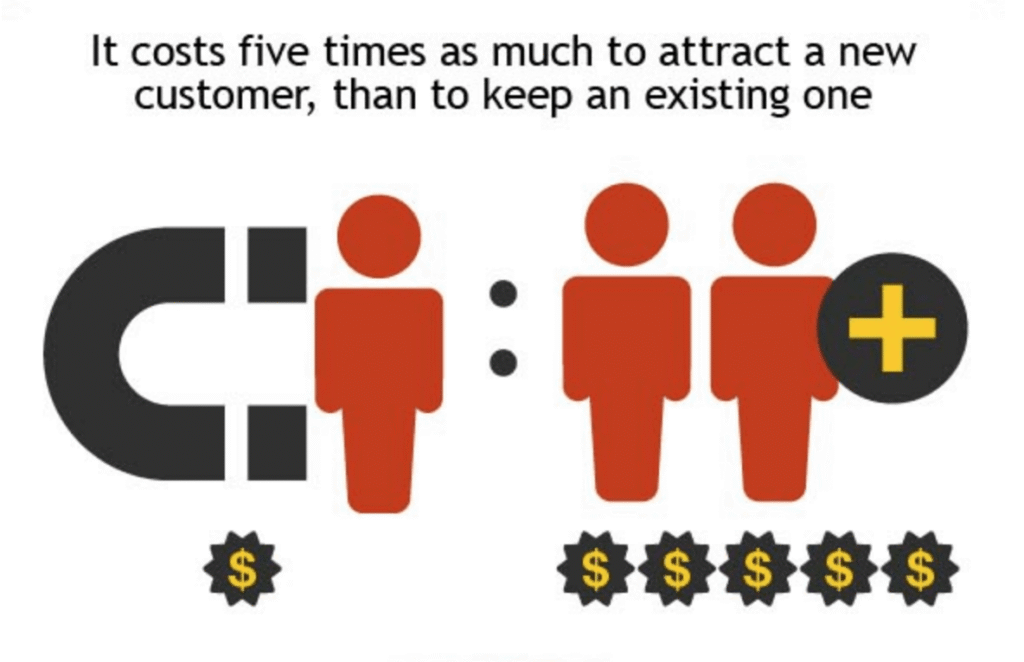
So, it’s surprising that more ecommerce store owners don’t put a heavier focus on making their current customers happy.
However, be aware, some products have a long life span and in these instances, you’ll need to focus on keeping your current customers happy as well as acquiring new ones.
Cars are a great example. Often people will keep their cars for years. So if you only focus on making your current customers happy, you’ll be waiting years and years before they return to buy a new car.
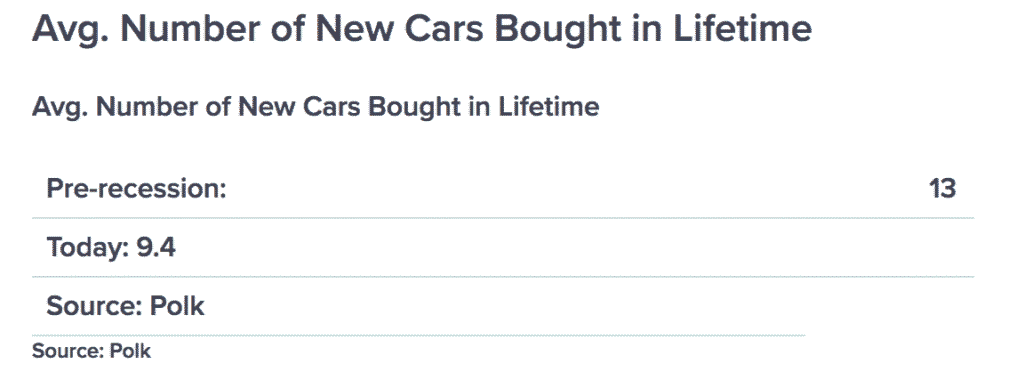
As you can see in the image above, people are buying fewer and fewer cars in their lifetime. This, however, doesn’t mean you should only focus on your new customers.
Although current customers are unlikely to buy multiple cars per year, every year, there will still be products that might interest them.
You could offer current customers deals on car cleaning bundles, or discounts on services.
Your prices don’t have to be the same for each segment of the customer
Ecommerce price discrimination means you don’t have to set the same prices for each customer.
Think about when you’ve gone to book tickets for a flight, and you see completely different prices to what your friend sees.

This is because online retailers are able to differ the prices individual sets of customers see. For example, it could be based on location. Office supply shops often increase their prices based on how close you are to their physical stores. If you’re further away from the store, you’ll pay more as they know you have less choice regarding where you buy from.
Is this process ethical, though? For many people (consumers), the answer is no. Why should they see a different price to someone else at a different time?
If you do plan on using this strategy to provide your current and new customers with different prices, make sure you do so in a way that’s fair and doesn’t seem like there’s a wild difference between what you’re offering to new vs. existing customers.
If you can’t offer different prices on your site, consider using loyalty
Loyalty is the key to success. Loyal customers are paying customers. Many ecommerce owners can’t afford to change their prices for specific segments of customers. Or perhaps they don’t have the resources available to monitor, track and change prices autonomously.
In these situations, one way to differentiate the prices for current customers is to implement a loyalty program so that your current customers can make use of specific discounts.
You might have people sign up for your loyalty program, and once they hit a certain number of points, they get 10% off their next purchases.
There are a number of different types of loyalty programs you can use within your own ecommerce store. Largely, however, they all follow the same route of rewarding customers who are loyal to you and your business.
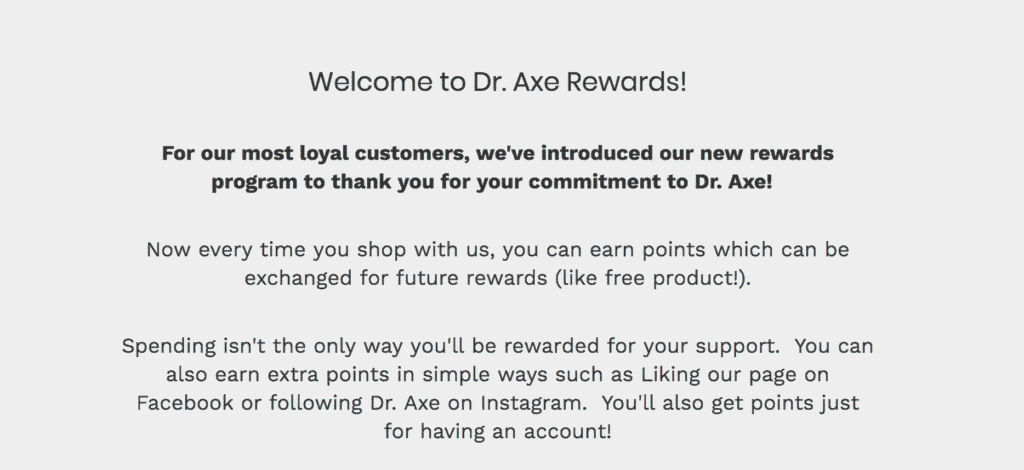
In the loyalty program above from Dr Axe, customers can sign up for the loyalty program and use their points to buy new products for free.
What’s more, customers can start using the loyalty program before they’ve even made a purchase. In the photo below, you can see that just by signing up for the loyalty program, I’ve gained 50 points. I also gained a further 100 points for liking the company’s Facebook and Instagram accounts.

This is a great way to reward people who join up for the loyalty program and also lowers the barrier to entry. I can use my loyalty points to get free products from the store as well as discounts on popular items.
In these cases, it makes sense to charge current and new customers different prices simply because you’re rewarding those customers who are happy to wax lyrical about your brand and business.
Final thoughts
Keeping your current customers happy is difficult but getting new customers is even harder. That’s why it’s important to differentiate the way you interact with each type of customer.
One of the best ways to do that is through the concept of changing prices to reflect whether someone is a first time customer or an existing customer.
You might decide to offer your best deals to your new customers to increase the number of total customers you have coming through the virtual door.
Or perhaps, instead, you choose to offer your best prices to your current customers in exchange for their loyalty.
There are pros and cons of both methods and the one you choose will largely depend on what sort of business model you run and the average customer lifetime value (CLTV).
Which new vs. existing customers are you currently prioritizing? And why?


Comments (2)
rachelsmith
29.10.2018Really this one is very interesting and informative post. Keep writing and sharing valuable information with us.
Jordie Black
08.11.2018!Thanks so much for your kind words, we’ll be sure to keep adding value to the community!
Comments are closed.