
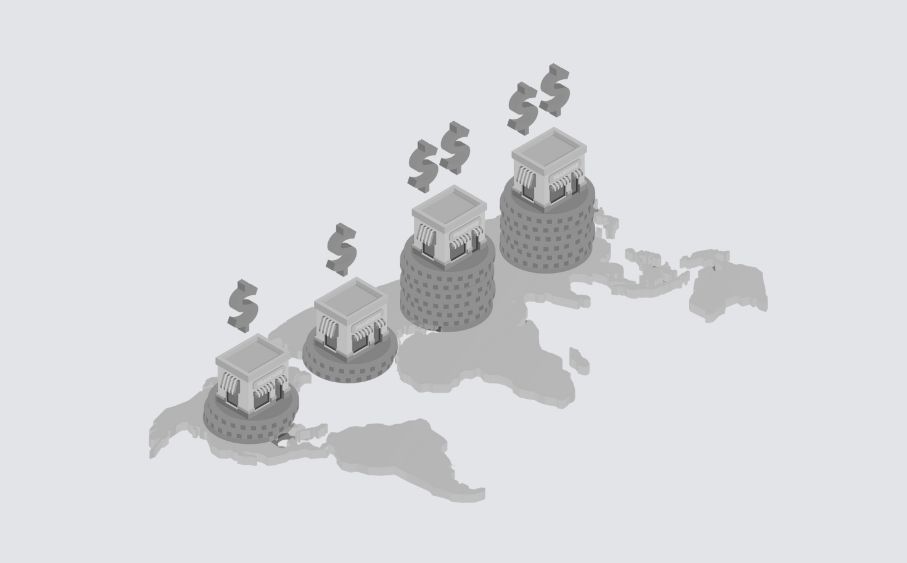
In ecommerce, several factors influence the end price of products and services. One of those factors is location. We experience this difference in our day-to-day lives on a vast number of occasions. You might have experience when you want to fill up your gas, you see that the price is different in every province. Or, you might have walked into a Starbucks store in a different country and found that the prices were different from those in your home country. Exact coffee and service, but why are the prices different? The reason is that companies typically apply geographical pricing most of the time. Geographical pricing is a pricing strategy that allows merchants to maintain a healthy profit margin by setting product or service prices at different price points based on location, competition, demand, and the economic conditions of the specific area. Let’s further examine the calculation behind geographical pricing strategy.
Importance of Geographical Pricing
Localization of pricing is quite necessary, since not every customer has or is willing to pay the same amount of money for the exact service or product. Every country and region has distinct market conditions that call for different market strategies. For example, a business can be a strong player in the market, and the demand for its brand can be much higher than in another country. So, if that business wants to increase its market share and demand in the other country, the pricing strategy naturally needs to be adapted to the country’s conditions. So, if you plan on entering another market, geographic pricing becomes really important. We should also note that shipping costs are among the most differentiating factors in geographical pricing. But how can we know which other factors drive a company to change its prices across borders?

Which Factors Influence Geographical Pricing
Different market conditions lead companies to adopt different pricing strategies in varying areas. The real physicality of moving goods as an operation, as we call it shipping, can significantly change a product’s price due to carrier costs. Besides that, covering local taxes and currency fluctuations is also essential for profitability. Yet to remain accessible, companies also need to set competitive prices. Let’s imagine you have a local competitor who offers a similar product for half the price. Your brand needs to lower prices to compete with the local brands, even to penetrate the market in the first place. The same situation goes for companies that need to match local purchasing power to keep up with the competitors. If your subscription price is way higher than people’s psychological thresholds, probably they won’t be able to afford it anyway.
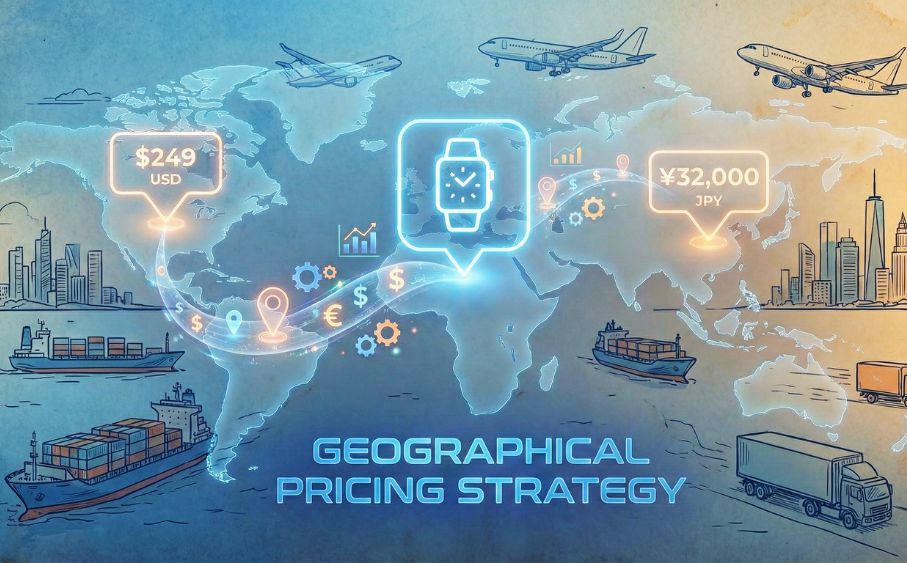
Geographical Pricing Models
There are a few models for geographic pricing to follow, depending on your business objectives. Let us guide you before implementing the most feasible geographic pricing examples:
Uniform Delivered Pricing
This method requires the selling company to average out shipping costs so that every customer pays the same price in spite of their location. So, the shipping costs are already included in the price. Whether you are a local or global business, to maintain profitability, you need to consider the price you set for your product carefully.
Zone Pricing
Zone pricing makes sense in countries with vast land areas, such as the US and Canada, where shipping costs may be higher for some parts of the country. For example, a New York-based brand may charge a customer in New Jersey a lower price for the exact product than a customer in California. To formalize the pricing arrangement, companies or manufacturers can divide regions into geographic zones, with customers within a zone paying one price while those in another pay another. Also, you can implement this strategy not only based on geography but also based on purchasing power, such as if you want to offer your services in low or high income areas, the price zones differ.
FOB (Free On Board) Pricing
In this model, covering shipping costs is the buyer’s responsibility from the factory to the delivery location. The base price is the same for everyone at the manufacturer, but the landed costs differ. Yet, the buyer is responsible for arranging shipping, and the manufacturer is not responsible for any issues or damage that may occur during transportation. Multi-brand resellers are also commonly opposed to this pricing. For example, a sneaker store may choose which lines to sell and import the products, but shipping costs will vary depending on its location. Thus, the end price customers see for the same product will also vary in different countries since the reseller adds it to the final price.
Basing Point Pricing
In this method, businesses choose a basing point, likely a central location, to arrange the most feasible shipping or production scenarios, and shipping costs are charged from there, regardless of where the goods actually ship from. So even if your store is located closer to the warehouse, the shipping costs are calculated from the ‘basing point’.
Freight Absorption Pricing
Freight absorption basically means free shipping to customers. In this type of pricing, sellers are responsible for covering all of the shipping costs. It does not always make sense to cover all shipping costs for every customer. That’s why freight absorption pricing is applied when entering a new market or when running a promotion that offers free shipping without a minimum requirement. In other cases, offering free shipping above a certain amount can increase the brand’s average order value.

Benefits of Using Geographical Pricing
First and most important benefit is that, since you price your products across different regions, you can follow a different strategy, as we mentioned before, and maintain your business’s profitability. In some scenarios, different pricing also allows you to keep a significant market share and recognition.
Disadvantages of Using Geographical Pricing
Customers want the best-priced deals, right? In some cases, people may prefer to shop from a low-price region/country. Sometimes, people may wish to purchase a product at a low price in one country and resell it at a higher price in another. That’s why some countries impose limits on individual purchases to prevent customers from exploiting price differences across countries.
Geographical Pricing Examples
Subscription-based services, such as Netflix and Spotify, offer their streaming services according to the local purchasing power to capture as many audience as possible. Their monthly Netflix fee, for example, is much lower in India than in Denmark.
Conclusion
Geographical pricing is all about balancing regional market nuances with operational costs to execute the best pricing strategy. If businesses can successfully implement this strategy, not only can they increase their presence in specific regions, but they can also maintain their profit margins regardless of location. Whichever method you choose implement based on your business objectives, the objective remains the same, and that is to deliver the same value to customers at a price that makes sense in local markets.