

Pricing and Competition Insights for Retailers
The Dutch coffee equipment market has grown rapidly with the rise of home coffee brewing and specialty coffee culture. From entry-level filter machines to premium espresso equipment, retailers compete across a wide range of price points and product segments.
To better understand the competitive landscape, we analyzed 1,918 retailer listings from Google Shopping in the Netherlands, covering four core product categories:
- Coffee Machines
- Espresso Machines
- Coffee Filters
- Coffee Grinders
For each product SKU, the analysis examined:
- Retailer distribution (how many stores sell the same product)
- Review counts as a proxy for demand
- Price dispersion between retailers
- Competition intensity across product categories
The results reveal significant pricing fragmentation, strong demand concentration around specific SKUs, and clear differences in pricing dynamics in the Dutch coffee equipment market.

Category Landscape
What are the most popular Coffee Products in the Netherlands?
Using review count as a proxy for demand, several products clearly dominate the Dutch coffee equipment market.
Most reviewed products:
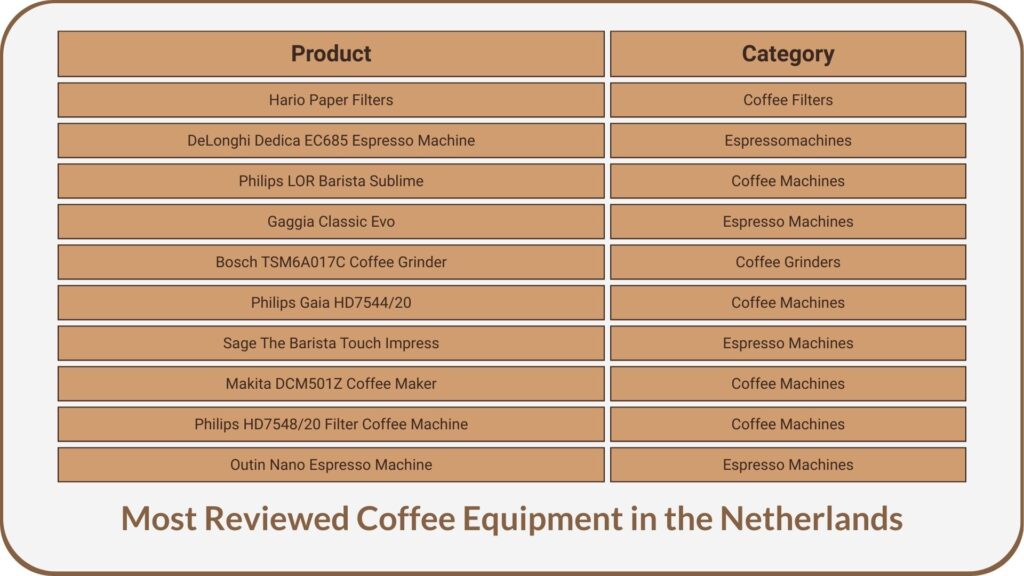
The mixed demand in the coffee equipment market reflects the wide spectrum of Dutch coffee consumers: entry-level equipment, alongside the mid-range home coffee machines, and premium espresso machines.
This means the demand is not concentrated in a single price segment in the Dutch coffee equipment market. Retailers selling these products are typically in need of monitoring competitor prices to be able to see how close competitors price the same SKUs across their marketplaces.
→ Coffee and espresso machines dominate the market
Across the 1,918 listings analyzed, the Dutch coffee equipment market is heavily concentrated around brewing equipment.
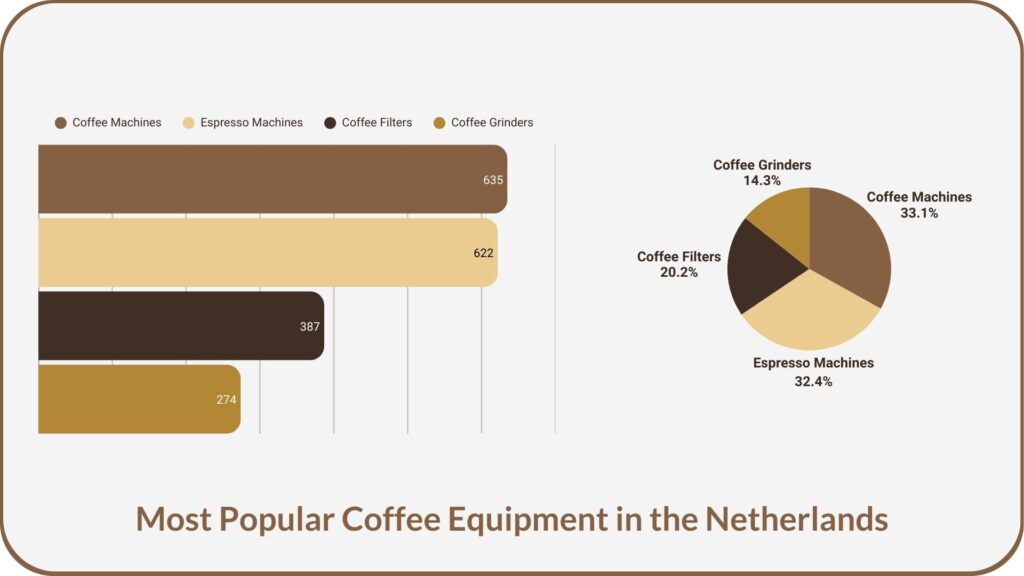
Coffee and espresso machines together account for nearly two-thirds of all listings, reflecting strong demand for home-brewing appliances.
Accessory categories such as filters and grinders appear less frequently but still maintain broad retailer distribution due to lower prices and repeat purchasing behavior.

Pricing Challenges in the Coffee Equipment Market
Despite the popularity of coffee equipment, pricing remains one of the most complex areas for retailers operating in this market.
Several structural factors contribute to pricing complexity:
→ Many products are sold by dozens of stores simultaneously, increasing price transparency and competition.
→ Large platforms such as Amazon and Bol.com amplify price competition by making it easy for consumers to compare prices instantly.
→ Coffee equipment spans everything from €5 filters to €1,000 espresso machines, requiring very different pricing strategies.
→ Appliance retailers often rely on seasonal campaigns, bundle discounts, and marketplace promotions, making price stability difficult to maintain.
These factors make manual pricing strategies increasingly difficult to sustain in competitive online markets, requiring the adaptation of automated pricing solutions.
With the lack of automated dynamic pricing strategies and losing too much time with manual pricing efforts, coffee equipment retailers risk either:
- pricing too high and losing visibility
- pricing too low and sacrificing margins
Monitoring competitor prices in real time becomes critical for maintaining balance.
Price Dispersion Across Coffee Equipment Retailers
Some coffee equipment products in the Dutch market show extreme price dispersion.
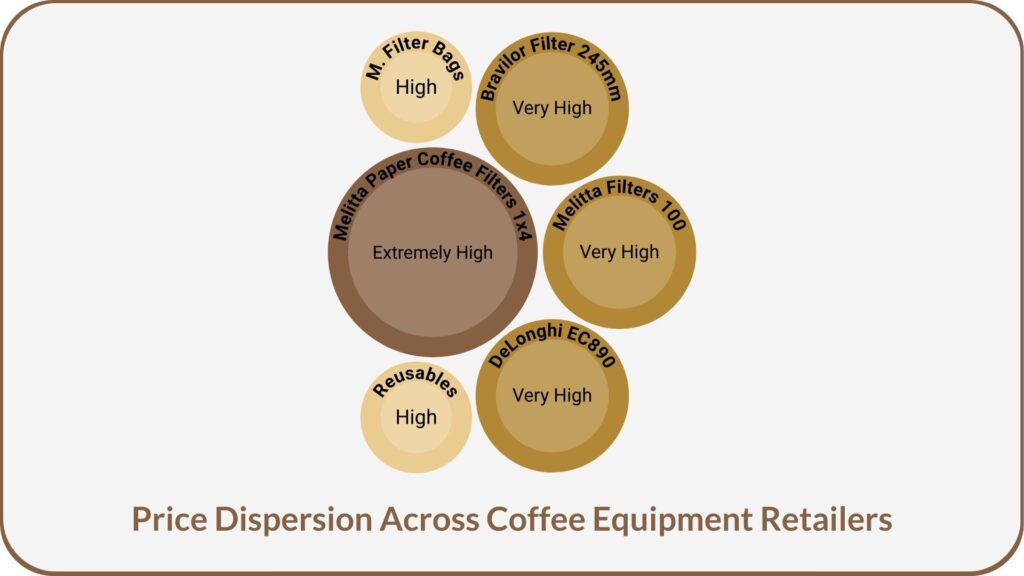
Large pricing dispersions indicate critical outcomes for competitive markets such as coffee equipment products in the Netherlands, and some of the crucial ones that must be paid attention to are listed below:
- Fragmented competition
- Variable pricing strategies
- Limited competitor and market price monitoring
In such conditions, retailers can easily create strong opportunities for automated repricing strategies to beat the intense competition and attract price-sensitive customers.
The Pricing Solution for Coffee Equipment Retailers
Coffee equipment retailers in the Dutch market need a smarter, data-driven approach to stay competitive while protecting margins.

Smarter Pricing with Prisync
- Real-Time Competitor Price Tracking
Retailers selling identical products, whether entry-level or premium, across multiple channels can constantly monitor competitor prices. Retailers must detect price changes and identify underpriced or overpriced products to react faster to market price shifts. This level of tracking is essential in categories like coffee filters and entry-level machines, where price competition is most intense.
- Dynamic Pricing at Scale
Static pricing strategies hardly work in high-demand markets such as the Dutch coffee equipment market.
Dynamic pricing enables retailers to adjust prices based on competitor data and apply smart pricing rules based on margin targets or market position. Dynamic pricing is essential to capture missed and new opportunities while maintaining profitability and growth.
