

Segment pricing is a strategy where businesses offer different prices to different customer groups based on value, behavior, location, or willingness to pay. This method targets different buyer groups, assuming their willingness to pay varies.
The core formula:
Segment Price = Base Price ± Segment Adjustment
Where Segment Adjustment = (WTP, purchase volume, geography, behavior)
Types of Segment Pricing
Demographic Segmentation
Age, occupation, or income determines the price. Probably one of the most well-known examples of segment pricing is Apple’s education savings; Apple offers identical products to teachers and students at discounted prices. It’s not because the product is different or a limited edition, but because students have a lower WTP, and introducing them at a lower price builds long-term loyalty.

Geographic Segmentation
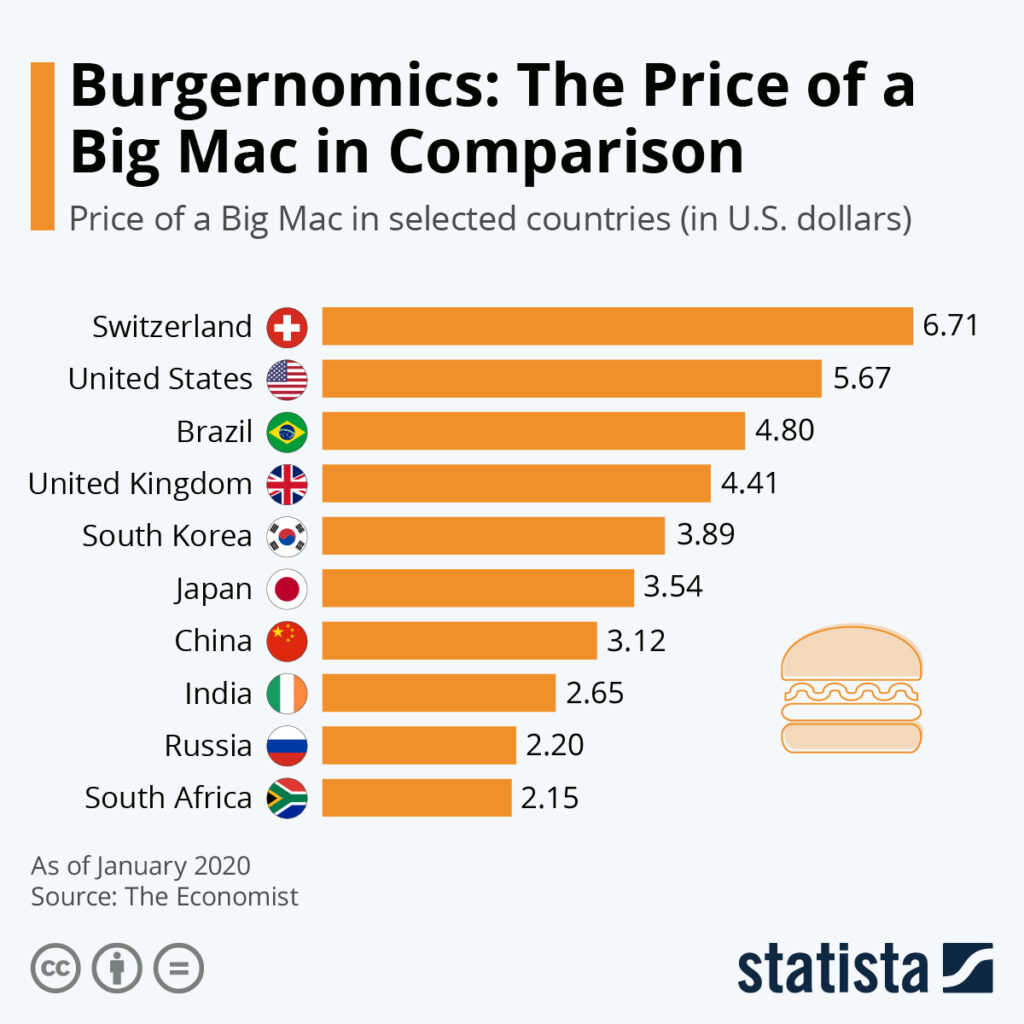
Prices vary by region or country depending on purchasing power or competition. For example, the game platform Steam applies local pricing to make its products and services more affordable in disadvantaged regions and countries. For ecommerce retailers, this means the same SKU can carry different price points across markets without eroding global margins; however, this may be due to different tax rules, etc.

Firmographic Segmentation (B2B)
Company size, industry, or user count determines pricing tiers. Most SaaS companies use this implicitly through their tiered plans.
Channel-Based Segmentation
In this method, the same product is priced differently depending on the platform it is sold on: your own website, a marketplace, or a retail partner. You may see different prices for the exact same product across these channels. Businesses apply this strategy to protect their profit margins because marketplaces and retail partners take a cut for selling the product on their platform. Brands that prioritize their DTC channel also use this approach deliberately, keeping their own storefront prices lower to drive customers toward their highest-margin sales channel.
Segment Pricing vs. Price Discrimination
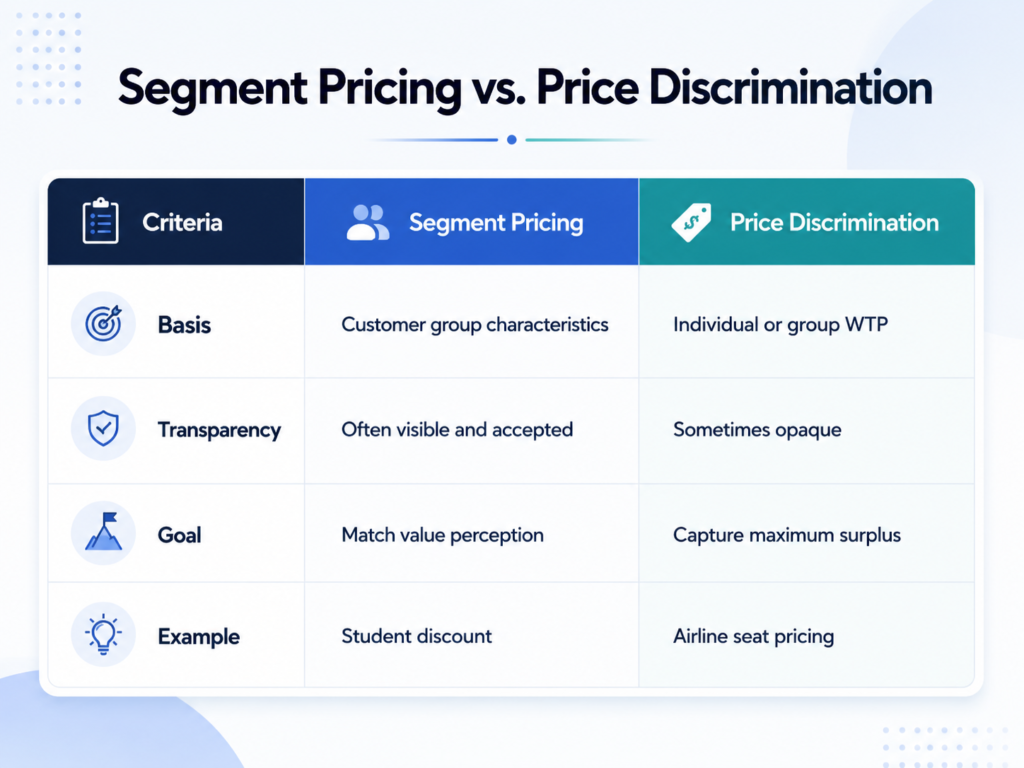
These two concepts are often conflated; however, there is a meaningful difference in intent and execution. Segment pricing and price discrimination are closely related, but segment pricing is usually framed as a structured strategy based on customer groups, whereas price discrimination focuses more directly on capturing differences in willingness to pay.

How to Identify Your Pricing Segments
Before defining a pricing segment, you need to understand your audience. These are essential questions to understand your customer segments.
- Who are your distinct buyer groups? — Demographics, firmographics, or behavioral clusters
- What does each group value? — Speed, quality, price, convenience?
- What is each group’s willingness to pay ceiling? — Survey data, price elasticity testing, or competitor benchmarking
- How price-sensitive is each segment? — A 10% price increase in one segment might cost you 30% of conversions; in another, barely 5%
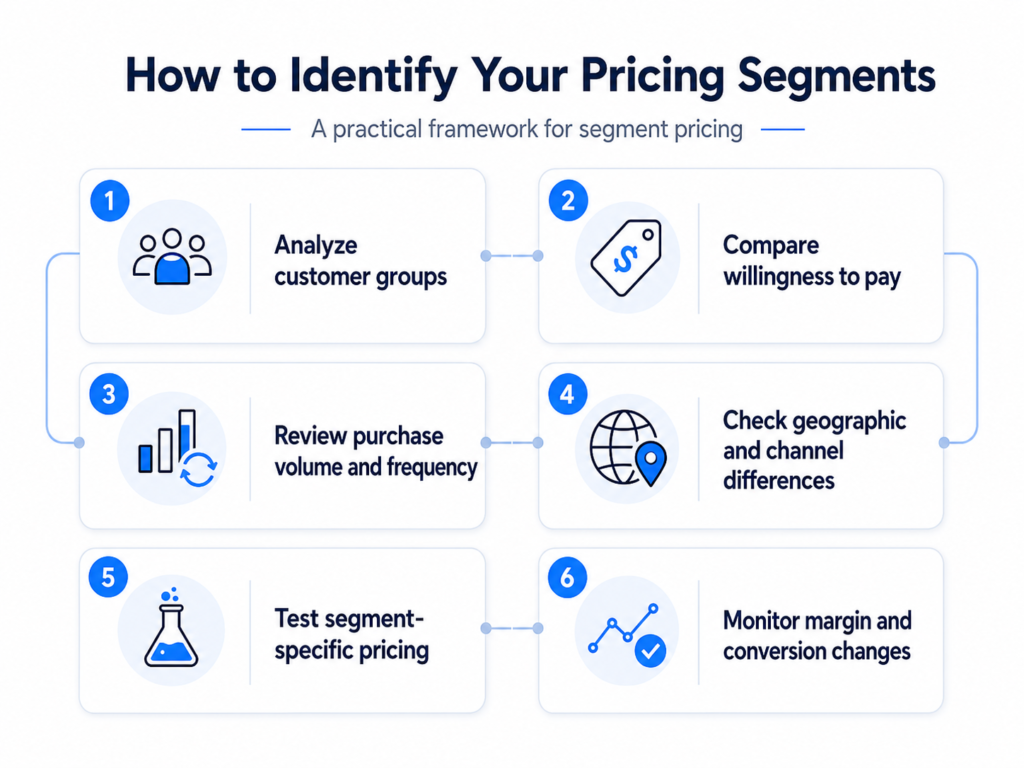
Once your customer segments are clear, pricing becomes a matching & evaluation problem. Prices should be determined via understanding segments’ perceived value with a price point that maximizes revenue without triggering churn.
Which factors exactly influence segment pricing? Segment pricing does not operate in a vacuum — your customers’ willingness to pay, the competitive landscape, legal boundaries, and the quality of your data all determine how effective your segmentation strategy will be.
Wrap Up
Segment pricing is one of the most effective tools for maximizing revenue without competing on a single price point.
If an ecommerce business applies it well, perceived value and price match across buyer groups. The biggest challenge is consistency, because over time the competitive landscape changes and buyer groups differentiate. For ecommerce businesses, segment pricing is more effective when supported by competitor price monitoring, market data, and automated pricing rules.